How Many Days in Seville? The Perfect 2, 3, 4 & 5-Day Seville Itinerary
Planning a trip to Andalusia often begins with the same question: how many days do you need in Seville?
For most first-time visitors, three days in Seville is the ideal minimum. It gives you enough time to visit the Royal Alcázar and Seville Cathedral, explore neighborhoods such as Santa Cruz and Triana, discover Plaza de España, and still experience the city without spending your entire trip rushing between monuments.
But if you can stay for four or five days, even better.
Seville is a city where some of the best experiences happen between the famous attractions: walking through historic streets, discovering small squares, stopping for tapas, understanding the different civilizations that shaped the city, or simply seeing how Seville changes after sunset.
So whether you have 2, 3, 4 or 5 days in Seville, here's how we would organize your visit.
Is 2 Days in Seville Enough?
Yes, but you'll need to prioritize.
With two days in Seville, concentrate on the historic center and the city's most important monuments rather than trying to see everything.
Day 1: Discover Historic Seville
For your first morning, start by getting oriented.
Seville has one of Europe's largest historic centers, and although many of its main attractions are within walking distance, understanding how the different neighborhoods and monuments connect makes exploring much easier.
Start around the monumental center and discover some of Seville's essential landmarks:
- Seville Cathedral
- The Giralda
- Archivo de Indias
- Royal Alcázar
- Santa Cruz
- Plaza del Triunfo
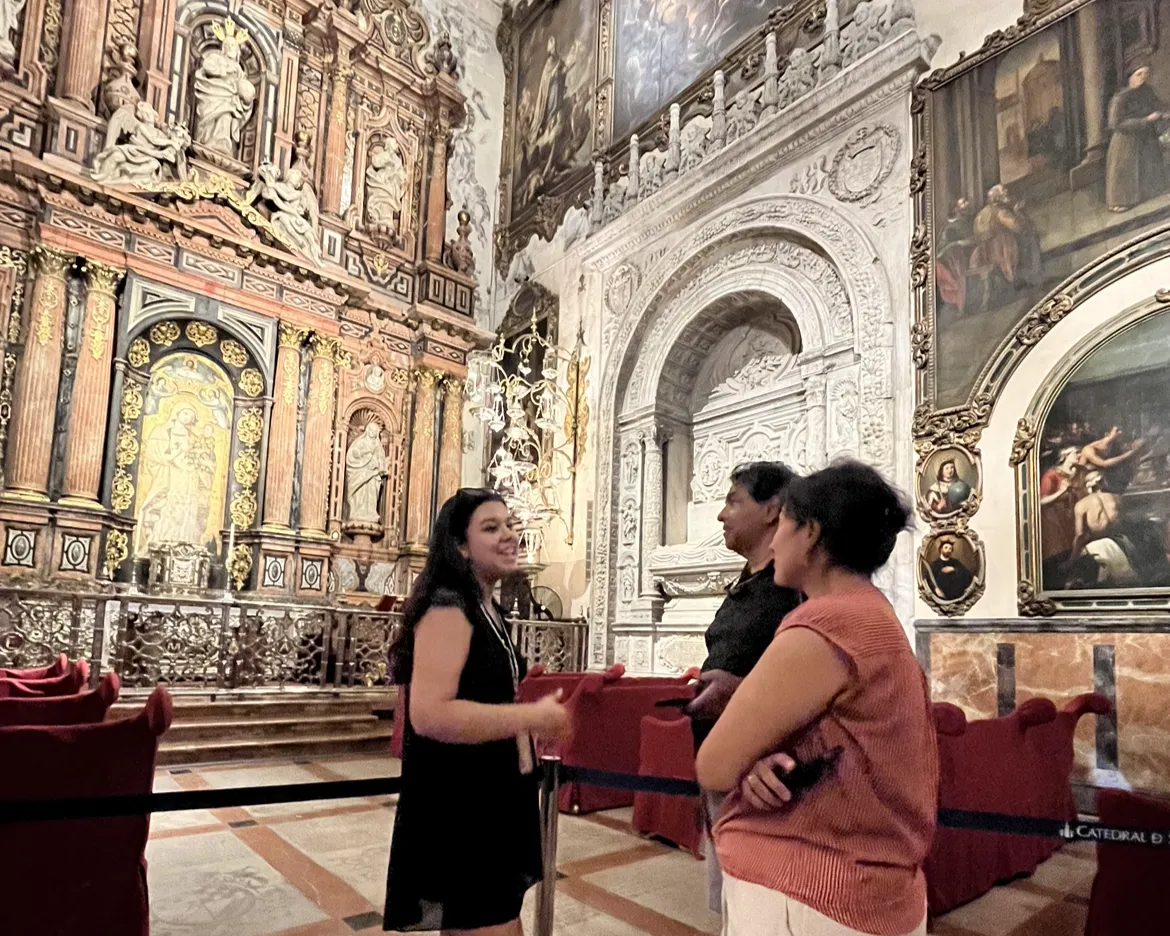
A guided Highlights Walking Tour of Seville can be particularly useful at the beginning of your stay. Rather than simply taking you from monument to monument, a good introductory tour should help you understand how Roman, Islamic, medieval Christian and later Seville developed.
It also gives you something surprisingly valuable: orientation.
Afternoon: The Royal Alcázar
Dedicate part of your first afternoon to the Royal Alcázar of Seville.
The palace complex contains centuries of architectural transformation, including Islamic influences, Mudéjar architecture, Gothic additions and later Renaissance elements.
Allow enough time for the gardens as well.
During the hottest months of the year, booking monuments during the warmer part of the day can also be a sensible way to organize your itinerary.
Evening: Tapas and Seville After Dark
Don't finish sightseeing when the monuments close.
Seville becomes a different city in the evening.
Walk through the historic center, explore the area around the Cathedral, or head toward the Guadalquivir River and Triana.
Dinner in Seville also tends to happen considerably later than in many northern European countries or the United States, so adapting to the local rhythm can make your evenings much more enjoyable.
Once you understand the city, exploring independently becomes much easier.
Day 2: Plaza de España, María Luisa Park and Triana
Begin your second day at Plaza de España, one of Seville's most recognizable landmarks.
Built for the Ibero-American Exposition of 1929, the plaza combines monumental architecture with bridges, ceramic decoration and a canal.
Look closely at the ceramic benches around the building. They represent Spanish provinces and depict historical scenes associated with different parts of the country.
Next, walk through María Luisa Park, one of the city's most pleasant green spaces.
Later, cross the Guadalquivir and explore Triana.
The neighborhood has deep connections with Seville's ceramic traditions, maritime history and flamenco culture.
Its character is quite different from Santa Cruz, which makes visiting both particularly worthwhile.
By the end of two days, you'll have seen many of Seville's major attractions.
But you'll only just be getting beneath the surface.

Is 3 Days in Seville Enough?
For most travelers, three days in Seville is the sweet spot.
Your first two days can cover the major monuments and neighborhoods.
Then use your third day to explore the history that isn't immediately visible.
Day 3: Discover the Hidden History of Seville
This is where Seville becomes especially interesting.
The city has been shaped by many different communities and civilizations, but their traces aren't always obvious.
Roman Hispalis lies beneath parts of the modern city.
Islamic Ishbiliya transformed its urban landscape.
After the Christian conquest of 1248, the city changed again.
And within medieval Seville existed one of the important Jewish communities of the Iberian Peninsula.
Explore Seville's Former Jewish Quarter
Many visitors walk through Santa Cruz without realizing they are exploring part of the area associated with Seville's medieval Jewish quarter.
But Jewish Seville cannot be understood simply by looking for buildings labeled "Jewish."
Much of that world disappeared or was transformed.
Understanding it requires reconstructing the historical landscape through documents, archaeology, urban history and surviving traces.
This is precisely why our Jewish Heritage Tour of Seville is based on original university research rather than simply repeating the legends traditionally associated with Santa Cruz.
Depending on your interests, you can also explore San Bartolomé and places connected with the city's Sephardic heritage.
For travelers interested in Jewish history, this can easily become one of the most memorable parts of a visit to Seville.
What to Do With 4 Days in Seville
If you have four days in Seville, you can finally slow down.
And that's important.
Trying to experience Seville entirely through a checklist of monuments misses much of what makes the city special.
Use your fourth day for places that receive less attention on typical first-time itineraries.
You might explore:
- Palacio de las Dueñas
- Casa de Pilatos
- Antiquarium and the Roman remains beneath Metropol Parasol
- Museo de Bellas Artes
- San Luis de los Franceses
- Alameda de Hércules
- Macarena
- Additional areas of Triana
This is also a good day to explore a specific aspect of Seville that interests you.
Architecture.
Roman history.
Jewish and Sephardic heritage.
Ceramics.
Flamenco.
Food.
Instead of asking only "What do I need to see in Seville?", start asking:
"What would I like to understand about Seville?"
That's when the city becomes much more interesting.
What to Do With 5 Days in Seville
Five days gives you the best of both worlds.
You have enough time to explore Seville properly while also considering a trip elsewhere in Andalusia.
And Seville is extremely well positioned for this.
Take a Day Trip From Seville
Several fascinating destinations can be reached from the city.
Córdoba
If we had to choose one destination for travelers interested in history, Córdoba would be very high on the list.
High-speed trains make the journey from Seville remarkably convenient.
Córdoba offers the extraordinary Mosque-Cathedral, Roman heritage, medieval streets and one of Spain's most important destinations for exploring Jewish history.
Altai Turismo also offers guided experiences in Córdoba, including tours focusing on its Jewish heritage.
Cádiz
For something completely different, consider Cádiz.
One of Europe's oldest continuously inhabited cities, it combines ancient history with an Atlantic coastal setting.
It's particularly attractive if you want a break from the monumental inland cities of Andalusia.
Ronda
Ronda offers another completely different landscape.
Its spectacular location around the Tajo gorge and famous Puente Nuevo make it one of Andalusia's most recognizable towns.
A Ronda day trip works particularly well when you already have several days allocated to Seville.
Granada
Granada is certainly possible to reach from Seville, but we would hesitate to treat it as a rushed day trip.
The Alhambra alone deserves significant time.
If your Andalusia itinerary allows it, spending at least one night in Granada will usually provide a much better experience.
Seville in Summer: Your Itinerary Should Change
If you're visiting in July or August, don't follow exactly the same schedule you would use in March or November.
Seville summers are extremely hot.
The solution isn't necessarily to avoid the city. It's to organize your day intelligently.
Start sightseeing early.
Use museums and monuments during hotter hours.
Stop for lunch and rest during the afternoon.
Then return outside in the evening.
During summer, we also organize our walking tours earlier in the morning whenever possible to avoid the most intense heat.
Trying to walk around Seville continuously from morning until late afternoon in August isn't an achievement.
It's simply exhausting.

When Is the Best Time to Visit Seville?
For comfortable sightseeing, spring and autumn are generally excellent periods to visit Seville.
Spring brings pleasant temperatures and some of the city's most important celebrations, although Semana Santa and Feria can also mean greater demand, crowds and accommodation prices.
Autumn offers another excellent period for cultural tourism.
Winter shouldn't be overlooked either. Compared with many European destinations, Seville's winters are relatively mild, making the city attractive for walking and sightseeing.
Summer requires more planning, but mornings and evenings can still be wonderful.
Do You Need a Car in Seville?
For a normal city break, no.
Most of the places first-time visitors want to see are accessible on foot, and walking is one of the best ways to understand the historic center.
Public transport, taxis and ride services can cover longer journeys.
If you're planning to explore rural Andalusia or several pueblos blancos independently, a car becomes much more useful.
But you don't need one simply to visit Seville.
Where Should First-Time Visitors Stay in Seville?
There isn't one perfect neighborhood for everyone.
Santa Cruz puts you extremely close to the Cathedral and Alcázar and is convenient for first-time sightseeing.
El Arenal is also very central and close to the river.
Triana offers a different atmosphere across the Guadalquivir while remaining within walking distance of the historic center.
Areas around Alameda de Hércules can appeal to travelers looking for restaurants, nightlife and a more contemporary local atmosphere.
When choosing accommodation, don't look only at distance.
In summer especially, being able to return easily to your hotel during the afternoon can be extremely valuable.
2, 3, 4 or 5 Days in Seville: Which Is Best?
Here's our simple recommendation:
| Time in Seville | Our recommendation |
|---|---|
| 1 day | Possible, but very rushed |
| 2 days | Enough for the main highlights |
| 3 days | Ideal minimum for most first-time visitors |
| 4 days | Excellent for history, neighborhoods and slower travel |
| 5 days | Ideal for Seville + a day trip |
| 6–7 days | Excellent base for exploring more of Andalusia |
If you're traveling through Spain quickly, two days will give you a good introduction.
But if you're asking us how many days you should spend in Seville, we'd choose three or four.
A Perfect 3-Day Seville Itinerary at a Glance
For first-time visitors, we would organize three days approximately like this:
Day 1: Historic center → Cathedral & Giralda → Santa Cruz → Royal Alcázar → evening walk and tapas.
Day 2: Plaza de España → María Luisa Park → Guadalquivir → Triana → flamenco or evening in the historic center.
Day 3: Choose the Seville you're most interested in → Jewish heritage, Roman history, architecture, women's history, museums or lesser-known neighborhoods.
That third day is important.
The first two show you what Seville looks like.
The third begins to explain why Seville is the city it is today.
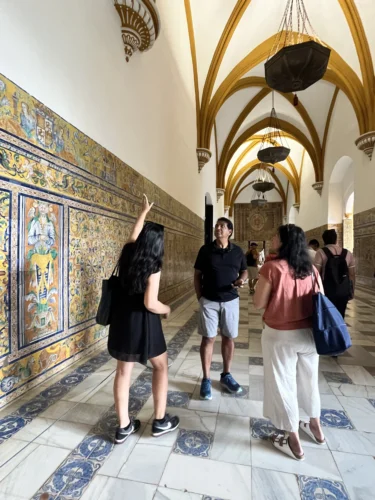
Frequently Asked Questions About Visiting Seville
Is 2 days enough for Seville?
Two days are enough to see many of Seville's main attractions, including the Cathedral, Alcázar, Santa Cruz and Plaza de España. However, three days provide a much more comfortable first visit.
Is 3 days enough in Seville?
Yes. Three days is an excellent amount of time for a first trip to Seville. It allows you to combine the major monuments with neighborhoods, cultural experiences and some of the city's lesser-known history.
Is 4 days too long in Seville?
No. Four days allow you to explore beyond the major tourist attractions and experience Seville at a slower pace.
Can you visit Córdoba from Seville in one day?
Yes. Seville and Córdoba are connected by high-speed rail, making Córdoba one of the easiest major destinations to combine with a stay in Seville.
Is Seville walkable?
Yes. Seville's historic center is highly walkable, and many major attractions are relatively close together.
What is the best area of Seville for first-time visitors?
Santa Cruz, El Arenal and other areas around the historic center are particularly convenient for first-time visitors because many major attractions can be reached on foot.
Discover Seville Beyond the Checklist
However long you decide to stay, don't make your visit simply a race between monuments.
Seville rewards curiosity.
Look beyond the façades. Ask why buildings changed. Notice how different civilizations reused the same urban spaces. Explore neighborhoods outside the standard tourist route.
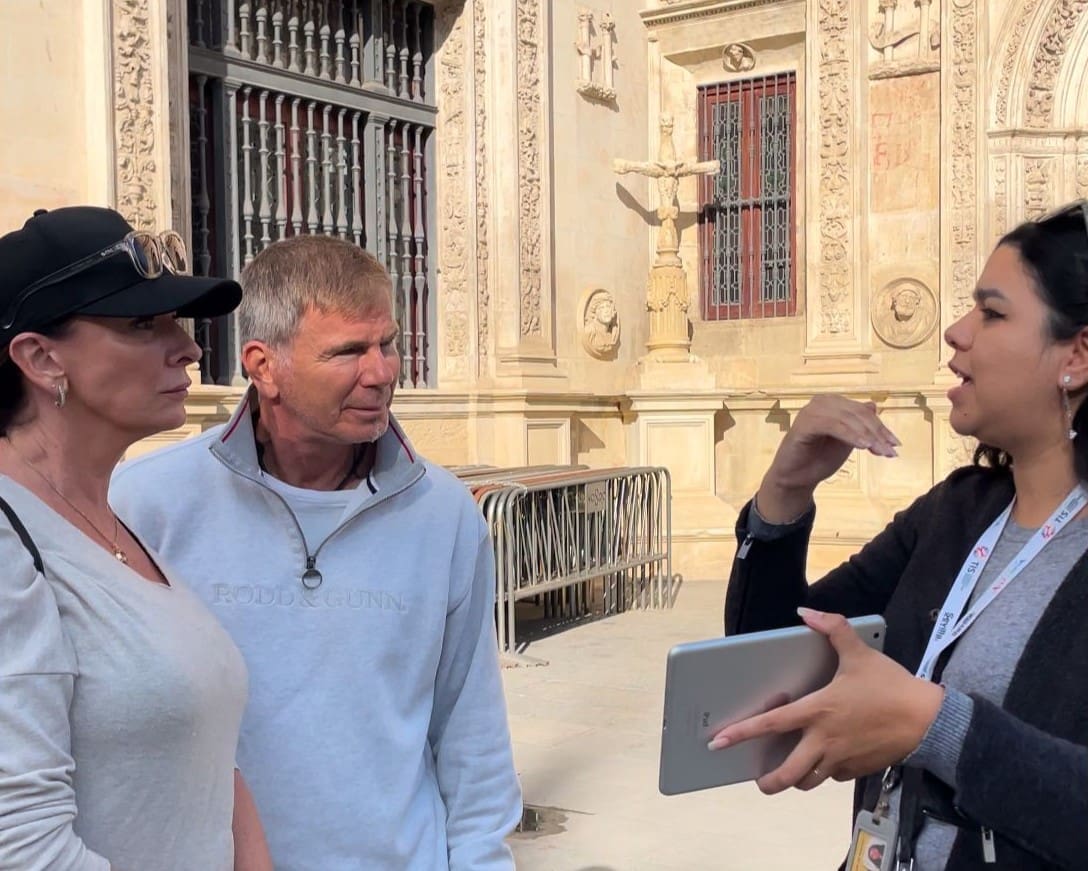
At Altai Turismo, our private tours are designed around exactly that philosophy: helping visitors understand Seville through its history, architecture and people rather than simply showing them where to take photographs.
If it's your first day in the city, our Highlights Walking Tour of Seville is an excellent introduction.
If you're interested in going deeper, you can explore the Royal Alcázar, discover the city's Jewish and Sephardic heritage, investigate the stories of women in Seville's history, or explore the architectural layers that transformed the city over centuries.
Because three days may be enough to visit Seville.
But understanding it can make you want to stay much longer.