Casa Sefardí de Sevilla: A Free Virtual Jewish Museum
Can you visit a Jewish history museum in Seville—even if you are thousands of miles away? Yes. Casa Sefardí de Sevilla is a free online Jewish history museum created to explore the Sephardic past of Seville through six interactive exhibition rooms, original historical documents and research into the city’s former Jewish Quarter.
For American travelers planning a vacation in Spain, Jewish heritage enthusiasts, students and people exploring their Sephardic roots, it offers a practical place to begin. You do not need to travel to Seville, book an admission slot or buy a ticket: the museum is available online in English.
Essential information: Casa Sefardí de Sevilla is currently a virtual museum, not a physical museum open to visitors. The future interpretation center remains a project. The online galleries are free; the in-person Jewish heritage walks are separate guided experiences with Altai Turismo.
Enter the six-room virtual museum
In this guide
What Is Casa Sefardí de Sevilla, the Online Jewish Museum?
Casa Sefardí is an independent cultural and educational initiative focused on the Jewish history of Seville, Spain. It uses a virtual museum format to bring together centuries of stories, documents, archaeological discoveries and Sephardic memory. Rather than displaying unconnected facts or presenting romantic legends as historical truth, the project encourages visitors to examine the evidence behind the city’s past.
The project was conceived by Alba Aurora Delgado Ramírez, a licensed tourist guide in Seville, as a master’s dissertation at Universidad Pablo de Olavide during the 2023–2024 academic year, under the direction of Dr. Inmaculada Concepción Carrasco Gómez. The underlying research extended to more than 150 pages. It also drew on conversations with scholars and representatives of the Jewish community.
Today, the website has six galleries that visitors can browse independently, together with a section on Seville’s Jewish Quarter, research articles and information about guided visits. The project ultimately envisions a physical interpretation center, but the entire online collection can already be visited.
It is especially useful because Seville’s Jewish history is not preserved in an obvious single museum building: the neighborhood changed, its places of worship were converted, and traces of its medieval past survive in archives and archaeological layers.

How to Visit Casa Sefardí Online: Step-by-Step Guide
Unlike an on-site museum, Casa Sefardí is accessible whenever you want, wherever you are. Here is how to make the most of the online experience:
- Open the Casa Sefardí homepage. You will see an introduction to the project, its six rooms and the city streets connected with its history.
- Select Collection. The interactive presentation is structured around six architectural arches, one for each historical room. Select an arch and enter its exhibition.
- Explore the objects and their descriptions. The museum pairs reproductions of artifacts and manuscripts with dates, descriptions, original provenance and historical explanations. Read captions: they often identify the archive or collection that preserves the original.
- Continue into The Jewish Quarter. This section is especially relevant if you are planning to visit Seville. It helps you understand Santa Cruz, San Bartolomé and the former boundaries of the Judería.
- Read the museum’s history blog. Its in-depth articles provide more context about individuals, archaeological finds, Sephardic culture and key historical turning points.
- Switch languages if necessary. The website offers English, Spanish, German and Hebrew, making it easier to share the resource with international family members, friends and students.
Suggested visiting time: allow at least 20–30 minutes for an introduction, or return for several sessions if you want to read the longer object descriptions and historical documents. This is a recommended reading schedule, not a ticketed or timed experience.
Start your free virtual museum visit
What Will You Find Inside the Six Online Museum Rooms?
Each room focuses on a different historical question. Together, the exhibitions span the Jewish presence in the Iberian Peninsula from antiquity to the present, while paying particular attention to the lived history of Seville.
Room I: Origins — Jewish Life in Ancient Hispania
Begin with the earliest evidence of Jewish communities in Roman and Visigothic Hispania. The room examines the limitations of surviving records, languages used by early communities, synagogue life and the increasingly restrictive laws of the Visigothic period. The difference between tradition and documented evidence is an important theme.
See the origins of Jewish history in the virtual collection →
Room II: Life in the Jewish Quarter — Houses, Synagogues and the Cemetery
After the Christian conquest of Seville in 1248, the city’s medieval Jewish Quarter developed within areas now known as Santa Cruz and San Bartolomé. This exhibition looks at the aljama, the legal and social setting of the community, its synagogues, the distribution of urban space and the burial ground outside the walls.
Documents and objects show how Jewish residents took part in daily life, even as religious laws and political circumstances changed. For visitors who have walked through Santa Cruz, this gallery reveals the neighborhood behind the souvenir shops and romantic lanes.
Room III: Historical Figures — The People Behind the Documents
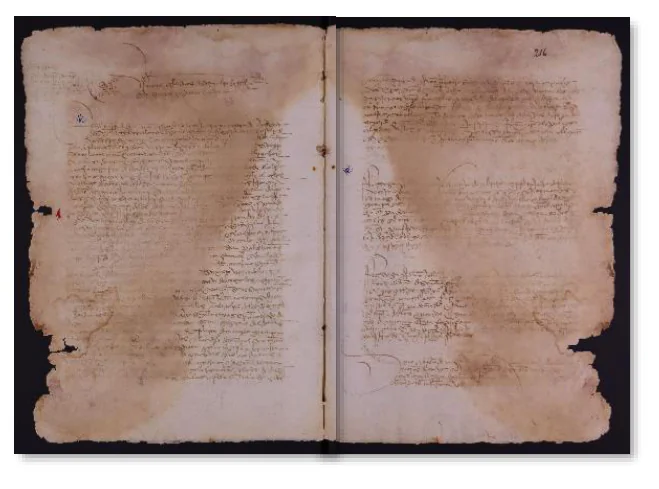
The museum takes an unusually personal approach to Seville’s Jewish history. For example, Doña Leal appears in notarial contracts from 1474 as a Jewish practitioner treating eye conditions. The source reveals not only her professional activity but also the connections among people of different backgrounds in the late medieval city.
Another story concerns Ana Gonçales, whose dispute over a butcher shop in 1477 appears in royal documentation. The object is not to assume that these two women represent every medieval Jewish life, but to understand how surviving records let us hear voices otherwise absent from conventional histories.
Room IV: Inquisition and Diaspora — Persecution and Displacement
This gallery addresses difficult events in Sephardic history. In 1391, anti-Jewish violence spread from Seville across other towns in the Iberian Peninsula, devastating communities and leading to deaths, flight and conversions. During the later fifteenth century, the Spanish Inquisition targeted baptized Christians suspected of heresy, including conversos accused of practicing Judaism. The expulsion edict of 1492 confronted Jews who had not converted with the choice of baptism or exile.
The distinctions matter: the Inquisition did not have the same jurisdiction over practicing Jews as it had over baptized Christians. Casa Sefardí places these events in their historical sequence and explores their consequences for families and communities.
Room V: Sephardic Legacy — Language and Culture Across Borders
The history of Sephardic Jews did not end in 1492. Communities established or strengthened across the Mediterranean and beyond preserved religious customs, foods, songs, family traditions and forms of Judeo-Spanish, often known as Ladino. The gallery explores this heritage as a living culture shaped by migration and contact with new environments.
Room VI: The Present Day — Remembering and Interpreting Jewish Seville
The final room asks how this past can be remembered responsibly today. Archaeological preservation, historical research, the contemporary Jewish community and the transmission of Sephardic culture all play a role. The online museum itself is part of this effort: sharing carefully documented history beyond the limits of a physical building.
Where Was the Jewish Quarter of Seville?
The medieval Jewish Quarter of Seville is associated mainly with the modern Santa Cruz and San Bartolomé neighborhoods, in the historic city center. Visitors often recognize Santa Cruz for its narrow streets and courtyards, but its current appearance is the result of centuries of alteration. The boundaries and functions of the former Judería cannot always be read directly from the buildings still standing.
After the conquest by Ferdinand III, the distribution of property and the privileges granted to the community were shaped by the Crown. Under Alfonso X, former mosques were allocated for use as synagogues. Those buildings later changed function, including the site of today’s Santa María la Blanca.
The old cemetery is associated with the area near the Murillo Gardens and Calle Cano y Cueto. Archaeological work uncovered medieval burials, making the site one of the most tangible sources for understanding the historical community.

Travelers sometimes ask whether Santa Cruz is the whole Jewish Quarter. The answer is no: the story extends into San Bartolomé and other associated locations. Studying the museum’s Jewish Quarter guide before visiting helps you recognize the significance of sites that otherwise look like ordinary streets, churches and gardens.
A Museum Built Around Historical Sources, Not Just Legends
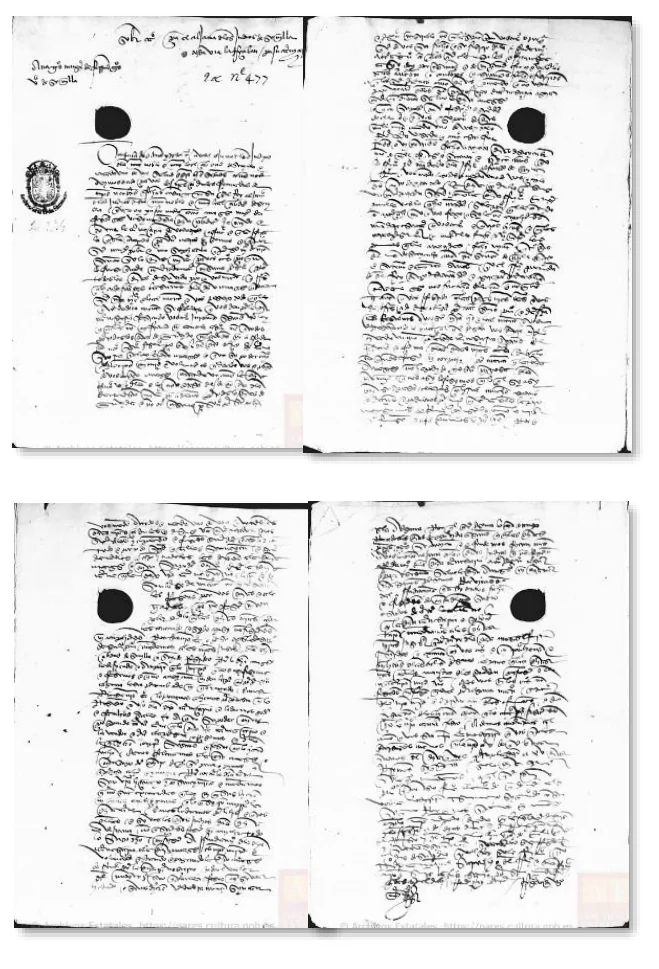
A defining feature of Casa Sefardí is its commitment to traceable documentation. Its exhibitions cite archives, archaeological finds and historical artifacts, often distinguishing original pieces from replicas or digitized reproductions. This is especially valuable for the study of medieval Jewish women, whose stories tend to be less visible in popular tourism narratives.
For instance, the museum presents royal documents involving Ana Gonçales, dated 1477 and preserved in the Archivo General de Simancas. Alongside Doña Leal’s notarial documents, these sources offer insights into commerce, work, women’s agency and the legal realities of late medieval Seville.
The team behind the project has also consulted academic specialists and members of the Jewish community when shaping the interpretation. In a subject marked by gaps in the record and enduring myths, transparency about evidence is as important as visual storytelling.
Read more about the researchers, methodology and future interpretation-center project →
Is Casa Sefardí the Same as a Jewish Heritage Walking Tour?
No. The free digital collection is an educational museum you explore on your own screen. A guided tour, by contrast, takes place in the city and allows you to ask questions while visiting historically significant locations in person.
Altai Turismo offers private Jewish history walking tours in Seville, led by licensed local guides, that connect the medieval quarter to surviving sites and archival findings. The physical city becomes a companion to the virtual exhibition, not a substitute for it.
If you are visiting Andalusia from the US, consider this two-part experience: read the collection before your trip, then explore Santa Cruz and San Bartolomé on foot. Afterward, revisit individual documents online to continue your research.
Explore our Jewish Heritage Tour in Seville
Who Is This Free Online Museum For?
American travelers can use it to prepare for Seville beyond the usual Alcázar-and-cathedral itinerary. Students and educators can explore the relationship between historical objects and their source archives. Sephardic descendants can find historical context for their community’s past, though it is not a searchable genealogy database and does not verify individual family ancestry. History enthusiasts can follow questions about women, trade, law, worship and cultural memory through museum objects rather than generic travel summaries.
As an educational resource, its main advantage is access: everyone can examine the exhibitions at their own pace without traveling or paying an admission fee.
Frequently Asked Questions About Casa Sefardí
Is there a Jewish museum in Seville?
Casa Sefardí de Sevilla is a Jewish history museum that currently operates entirely online. It is also a project for a future physical interpretation center, but there is no Casa Sefardí museum building open to visitors yet.
Is Casa Sefardí free to visit?
Yes. The virtual museum and its six exhibition rooms can be explored free of charge, without reserving a time slot or buying a ticket.
Where do I enter the virtual museum?
Go directly to the online Collection page and choose one of the six exhibition rooms.
Does the museum have an English version?
Yes. Casa Sefardí is available in English, Spanish, Hebrew and German. Its English version is particularly useful for travelers from the United States.
Does the virtual museum provide historical sources?
Yes. Exhibit entries include provenance, dates and descriptions, with references to archival documents and museum objects. Some images are reproductions, which are distinguished from original artifacts.
Is it a Sephardic genealogy website?
No. It is an educational history museum, not a database for tracing particular family lines. It may, however, help researchers understand the places and historical forces that shaped Sephardic communities.
What is the connection between Casa Sefardí and Altai Turismo?
Casa Sefardí and Altai Turismo are linked through their founder, Alba Delgado Ramírez. The museum explains Jewish Seville online, while Altai Turismo organizes guided heritage walks in the physical city.
How much time should I spend exploring?
You can read the introduction in a few minutes or spend much longer exploring individual documents. A first visit of around 20–30 minutes is a useful suggestion, not a required duration.
Discover Seville’s Jewish Heritage—From Anywhere
Seville’s former Judería is more than a picturesque neighborhood. Its history involves the lives of families, merchants, scholars, craftspeople and women whose names still appear in records hundreds of years later. Casa Sefardí brings those traces together in a digital museum created to preserve memory and encourage careful historical interpretation.
Whether you are reading from New York, California, Florida or already in Seville, the collection is open. Start with the six rooms and discover a part of Spanish history that deserves a closer look.
Explore the Casa Sefardí free online museum
Related reading on our blog
Further reading on casasefardisevilla.com: About the project · The Jewish Quarter · Historical research articles
Visit Seville with a licensed local guide
Private tours in English for couples, families and small groups, designed around what you want to see. Book online in two minutes, or send us your dates and we will get back to you within 24 hours.
- Official licensed guides
- Private tours, never a group
- Secure online payment
Book a private tour online
Prefer a tailor-made tour?
Tell us your dates, group size and interests. We can combine Seville with Córdoba, Ronda or an Iberian ham experience.
Chat on WhatsApp