'/%3E%3C/svg%3E)
'/%3E%3Cpath%20fill='%23b2b2b2'%20d='M241%20382q0%2016%2017%2026%2017%2011%2042%2011t42-11q16-11%2017-26V269H241'/%3E%3Cpath%20fill='%239f7e00'%20d='M241%20379q0%2014%208%2023%209%209%2021%209%2014%200%2021-9%209-9%209-23V269h-59'/%3E%3Cpath%20d='M241%20339v-70h59v110q0%2014-9%2023l-6%205v-68h-15v72q-8%200-14-4v-68zm59%2040c0%2022%2015%2032%2029%2032%2021%200%2030-18%2030-32v-40h-59'/%3E%3Cpath%20fill='%239f7e00'%20d='M266%20277v5h2v12h-3v-5h2v-5h-9v5h2v5h-4v9h3v18h-5v10h34v-10h-5v-18h3v-9h-4v-5h2v-5h-9v5h2v5h-3v-12h2v-5zm42%20101q0%2010%206%2017%206%206%2015%207%2010-1%2016-7%206-7%206-17v-29h-43'/%3E%3Ccircle%20fill='%230044ad'%20cx='329.5'%20cy='372'%20r='6'/%3E%3Cellipse%20fill='%230044ad'%20cx='300'%20cy='340'%20rx='16'%20ry='21'/%3E%3C/svg%3E)
Where to See Flamenco in Seville: The Best Shows, Tablaos and How to Avoid the Tourist Traps
Here is the short answer, before anything else: to see authentic flamenco in Seville, choose a small venue, a tablao with well under a hundred seats, live singing and live guitar, or, if you are lucky enough to catch one open to visitors, a peña flamenca. Avoid the big halls that seat busloads, serve dinner during the performance and run shows on an hourly conveyor belt.
As licensed local guides in Seville, we are asked where the “real” flamenco is every single week, and the honest answer takes more than one sentence. Flamenco here ranges from spine-tingling to dreadful, and the ticket price tells you surprisingly little about which one you are buying. Below is our shortlist of the best flamenco shows in Seville, what they cost, where to see flamenco for free, and how to tell a great night from a tourist trap.
The Best Flamenco Shows in Seville: Our Shortlist
These are the venues we would send a friend to. All have live singing and live guitar, most shows last about an hour, and prices are approximate for 2026; check the venue’s website when you book.
| Venue | Neighborhood | What it is like | Approx. price |
|---|---|---|---|
| Casa de la Memoria | Centro (Calle Cuna) | Intimate patio of a historic house, around 100 seats, no food, two shows a night. The classic recommendation for a first flamenco show. | €20–€25 |
| La Casa del Flamenco | Santa Cruz | Small courtyard venue in an old Sevillian house, seats close to the stage, no dinner, one-hour show. | €20–€25 |
| La Casa de la Guitarra | Santa Cruz | A tiny room of about 50 seats around a guitar collection; the most up-close option in the center. | €18–€22 |
| Museo del Baile Flamenco | Santa Cruz | Cristina Hoyos’ flamenco museum: an evening show in the patio that you can combine with the exhibition. | €25–€30 |
| Tablao Los Gallos | Plaza de Santa Cruz | Open since 1966, the longest-running tablao in Seville; a longer 90-minute show with a drink included. | €35–€40 |
| Tablao El Arenal | El Arenal, by the bullring | Larger and more polished, with drink, tapas or dinner options; good performers, less intimacy. | €40–€80 |
| La Carbonería | Santa Cruz | A big informal bar with free flamenco most nights; noisy and fun rather than refined, arrive early for a seat. | Free (buy a drink) |
| Casa Anselma | Triana | Legendary late-night bar: doors open around midnight, no tickets, no schedule, sevillanas and flamenco until late. Closed in high summer. | Free with a drink |
Free flamenco in Seville: if you are on a budget, La Carbonería and Casa Anselma are the two names to know. Expect a party rather than a concert, and do not expect the silence a tablao gives the singer. Some small bars in Triana also host live sessions on weekend nights; ask at the bar, because they are rarely announced online.
How much do flamenco shows in Seville cost? Most small tablaos charge between €20 and €30 for a one-hour show without food. Los Gallos and the larger venues cost €35 to €40, and dinner shows run from €60 upwards. Children’s tickets are usually around half price, and the early show is the one to pick with kids.
Tablao vs. Peña vs. Big Theater: Know What You’re Buying
Seville sells flamenco in three basic formats, and they are very different experiences.
A tablao is a purpose-built flamenco venue — the name comes from tablado, the wooden stage that lets you hear the footwork as percussion. The best ones are intimate: a small room, a singer (cantaor), a guitarist, one or two dancers, and an audience close enough to see the sweat. Tablaos are professional and ticketed, and that’s fine — authenticity isn’t about being free or improvised, it’s about live music performed with intent for people who are actually listening. Sometimes they will offer drinks and tapas.
A peña flamenca is a private flamenco club — a members’ association where aficionados gather to listen, argue, and occasionally witness something unrepeatable. Peñas are the deep end of the culture: some open performances to the public, but schedules are irregular, mostly in Spanish, and rarely bookable online. Wonderful if you have time and curiosity; hard to plan around if you have one evening.
The big theater or dinner-hall show is flamenco scaled up for volume: hundreds of seats, amplification doing heavy lifting, sometimes a buffet or a three-course dinner served during the performance. Production values can be slick, but intimacy — the thing flamenco actually runs on — is the first casualty.
| Tablao (small) | Peña flamenca | Big theater / dinner hall | |
|---|---|---|---|
| What it is | Purpose-built venue with a nightly live show | Private aficionados’ club | Large-scale staged show, often with dinner |
| Audience size | Small — often under 100 | A room of regulars | Hundreds per seating |
| Music | Live cante and guitar | Live, sometimes raw and unplanned | Live but heavily amplified |
| Atmosphere | Close, focused, quiet during the singing | Insider, unpredictable, mostly Spanish | Busy, commercial, cutlery noise |
| Booking | Easy, ticketed | Irregular, rarely online | Very easy — that’s a clue |
| Best for | Most visitors who want the real thing | Aficionados with flexible schedules | People who prioritize convenience over duende |
How to Spot a Flamenco Tourist Trap
You don’t need to be an expert to filter out the worst options. These red flags are reliable:
- Recorded music. If there is no live singer and no live guitarist on stage, walk away. Flamenco without live cante is a dance recital with props.
- Flamenco + paella + sangria packages. That combination exists for one customer only, and it isn’t a local.
- Hawkers with flyers pressing tickets on you near the Cathedral. Good venues sell out without street promotion.
- Shows every hour on the hour. Real performers don’t do eight sets a day. Rotating-cast conveyor shows are exactly what they sound like.
- Hundreds of seats. Flamenco is chamber music. Past a certain room size, you’re watching a screen-sized version of something that only works up close.
- Photography encouraged mid-show. Serious venues protect the performance; if the house lets fifty phones film the whole set, the performers are treated as scenery.
None of these automatically means the dancers are bad — Seville has excellent professionals working every kind of room. It means the format is working against them.
What Time Should You Go?
Most tablaos in Seville run two performances a night, typically around 7 pm and 8:30 to 9 pm, with a third late show in high season. Exact schedules change by season, so always check the current times when you book.
As a general rule, the early show suits families and the jet-lagged, and leaves the evening free for dinner afterwards — exactly how we’d plan it, as you’ll see below. The later show tends to draw a more mixed crowd, including locals, with an atmosphere a notch more relaxed and concentrated.
One practical note: Seville’s peak seasons are spring and fall, and small venues mean small capacity. In those months, book your flamenco tickets several days ahead rather than trusting your luck at the door.
Is the Dinner Show Worth It? An Honest Answer
We get asked this constantly, so here it is plainly: we don’t recommend dinner shows in Seville.
The logic is simple. A kitchen plating two hundred covers at once produces banquet food at a markup, and a room full of diners produces cutlery noise during the cante — the worst possible soundtrack for a soleá. You compromise both halves of the evening: a worse dinner than any decent tapas bar nearby, and a worse show than the same artists would give a quiet room.
The fix is easy, because a proper tablao show runs about an hour. Do them separately: an early tapas crawl and then the show, or the show first and a late Sevillian dinner after, which is what locals would do anyway. You lose nothing and gain both.
Triana: Where Seville’s Flamenco Blood Runs
Cross the bridge to Triana and you’re standing in one of flamenco’s true birthplaces. For centuries this was the neighborhood of potters, sailors, and — crucially — Seville’s Gitano (Gypsy/Roma) community, living in shared-courtyard houses called corrales de vecinos. Flamenco’s oldest song forms took shape in those courtyards and forges, and whole dynasties of singers carry Triana in their names.
The neighborhood’s history is layered and not always pretty — the riverbank castle at its entrance housed the tribunal of the Spanish Inquisition, a story we’ve told in our post on the Castle of San Jorge in Triana.
For flamenco in Triana itself, the two classic addresses are Casa Anselma (late, free and unpredictable) and Teatro Flamenco Triana on Calle Pureza, a small theatre venue with nightly shows.
An honest caveat: Triana’s flamenco pedigree is real, but it isn’t a guarantee for every bar that hangs a poster of a dancer. The neighborhood has both genuine flamenco corners and tourist-facing imitations, so use the same red-flag checklist there as anywhere — and go anyway, because Triana’s ceramic-tiled streets at dusk are worth the walk regardless of what’s on stage.
Where We Take Our Guests
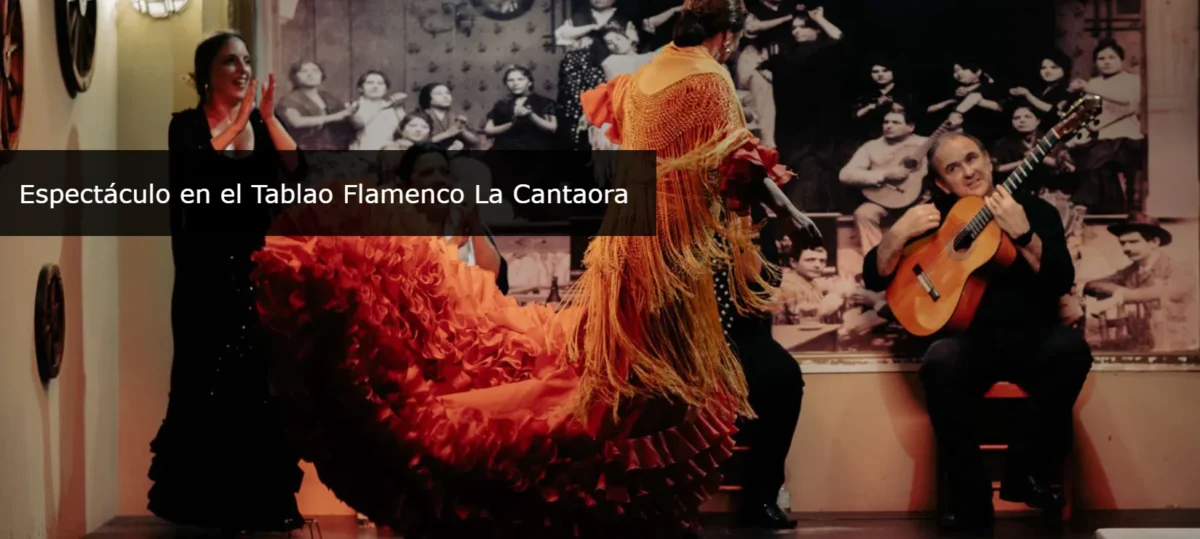
Full disclosure of how we fit into this: we are licensed local guides, not a ticket desk, and we don’t run a tablao ourselves. For flamenco we work with La Cantaora, an intimate tablao in central Seville, where we arrange bookings for our guests — the live show runs about an hour, tickets are issued by the venue at the venue’s prices, and cancellation follows the venue’s policy shown at checkout.
What we add is everything around the hour: we can build a tour around the show — a private walk through Santa Cruz, a tapas route before or after. You’ll find the details on our flamenco in Seville page.
Etiquette: How Not to Be That Audience Member
- Be silent during the singing. Talking during the cante is the cardinal sin. Between numbers, chat away.
- Photos: follow the house rules, which usually restrict photography during the performance; some venues allow it in the final number. Never, ever use flash.
- Shouting “olé” is allowed — encouraged, even — but it belongs in the pauses, as a response to something that moved you. If in doubt, applaud at the end of each piece and you’ll never be wrong.
- Arrive early. In a small room, late arrivals walk through the middle of somebody’s bulería.
- Dress: smart casual is plenty. Nobody expects formal wear, and locals don’t dress up for a tablao.
Flamenco in Seville: Quick FAQ
Do you tip at a flamenco show in Seville?
No — tipping is not expected at flamenco shows in Seville. This surprises many American visitors, but Spain has no tipping culture in the U.S. sense: the performers are professionals paid by the venue, and there’s no tip jar, no expectation, and no awkwardness in simply not tipping. The ticket is the payment. If the show moved you, the currency performers actually value is loud applause and a well-timed olé — and if you order drinks, rounding up the bill by some small change is a normal Spanish courtesy, never an obligation.
How long is a flamenco show in Seville?
About an hour at most tablaos, including La Cantaora, the venue we work with. That’s the traditional format — intense and concentrated rather than long — and it makes the show easy to combine with dinner before or after.
Do I need to book flamenco tickets in advance?
In spring and fall — Seville’s peak seasons — yes: small venues sell out days ahead, so book early. In quieter months you have more margin, but for a specific venue and showtime, booking ahead always beats the walk-up gamble.
Can I take photos during the show?
Usually not during the performance — most serious venues restrict photography and announce the rules at the start. Some allow photos during the final number. Whatever the policy, flash is always off-limits.
Is a flamenco dinner show worth it?
In our honest opinion, no. The food is banquet catering at a markup and the dining noise undermines the performance. Since a show lasts about an hour, see it clean and eat tapas separately — better dinner, better flamenco, same evening. At La Cantaora they offer you any option as long as you book ahead.
Is flamenco better in Seville or Granada?
Both are flamenco cities, but they offer different things. Seville, with Triana, Jerez and Cádiz nearby, is the heartland of the tablao tradition and of the singing styles flamenco is built on. Granada is famous for the zambra shows in the Sacromonte caves, which are more about setting and dance. If you only see one show on your trip, a small tablao in Seville is the safer bet for live cante and guitar.
Which flamenco show in Seville is best for families?
Casa de la Memoria and La Casa del Flamenco: both shows last about an hour, start early in the evening and have no dinner service, which suits children. La Carbonería is free but late and loud, and Casa Anselma does not open until around midnight.
Planning your Seville evenings? Read our guide to what to do in Seville, see why a private guide beats mass tourism, or let us build the whole night — show, walk, and tapas — starting from our flamenco page.
Visit Seville with a licensed local guide
Private tours in English for couples, families and small groups, designed around what you want to see. Book online in two minutes, or send us your dates and we will get back to you within 24 hours.
- Official licensed guides
- Private tours, never a group
- Secure online payment
Book a private tour online
Prefer a tailor-made tour?
Tell us your dates, group size and interests. We can combine Seville with Córdoba, Ronda or an Iberian ham experience.
Chat on WhatsApp